Biohazard Mold Removal Pueblo
Biohazard mold cleanup in Pueblo takes more than surface scrubbing, especially where Arkansas River moisture and older Santa Fe Drive properties trap contamination.
Professional Biohazard Mold Removal In Pueblo, CO
Biohazard mold removal is controlled remediation for unsafe fungal contamination tied to sewage, bloodborne risk, heavy decay, or compromised building materials. It is for Pueblo homeowners, landlords, and property managers facing unsafe indoor conditions made worse by floodplain moisture, aging plumbing, and poor ventilation in older neighborhoods.
Biohazard-level fungal contamination is different from a damp closet or a small bathroom patch. In my experience working around Pueblo homes, it often shows up after a sewer backup, long-term roof leak, abandoned property damage, or hidden moisture behind walls that has been ignored for weeks or months.
Pueblo has its own pattern of risk. We often see older crawl spaces in Bessemer where freeze-thaw movement has torn vapor barriers loose, Eastside brick homes where moisture lingers behind plaster, and rental properties near Downtown Pueblo where plumbing failures are found late because a unit sat vacant. That is where a careful remediation protocol matters.
Mold Removal Pueblo handles containment, contaminated material removal, spore control, and moisture correction from 1469 Santa Fe Dr, Pueblo, CO 81006. Local property owners can learn more through local mold cleanup help when they need a practical next step without getting a vague sales pitch.
The goal is not just to make the room look clean. The goal is to make the affected area safer to enter, repair, and occupy again.
Our Process for Biohazard Mold Removal
Site Safety Review and Moisture Mapping
We start by identifying what made the mold biohazard-level in the first place. That could be sewage contamination, decayed organic material, a long-term leak, or water-damaged building materials that are no longer safe to disturb without protection.
In Pueblo, this first step often changes the whole plan. A basement near the Historic Arkansas Riverwalk may have floodplain-related seepage, while a Belmont ranch home may have an old cast-iron drain line leaking under a bathroom wall. The visible growth is only one part of the job.
We use moisture readings, visual inspection, odor tracing, and containment planning before demolition begins. That prevents unnecessary tear-out while also keeping unsafe material from being handled casually.
Containment Before Disturbance
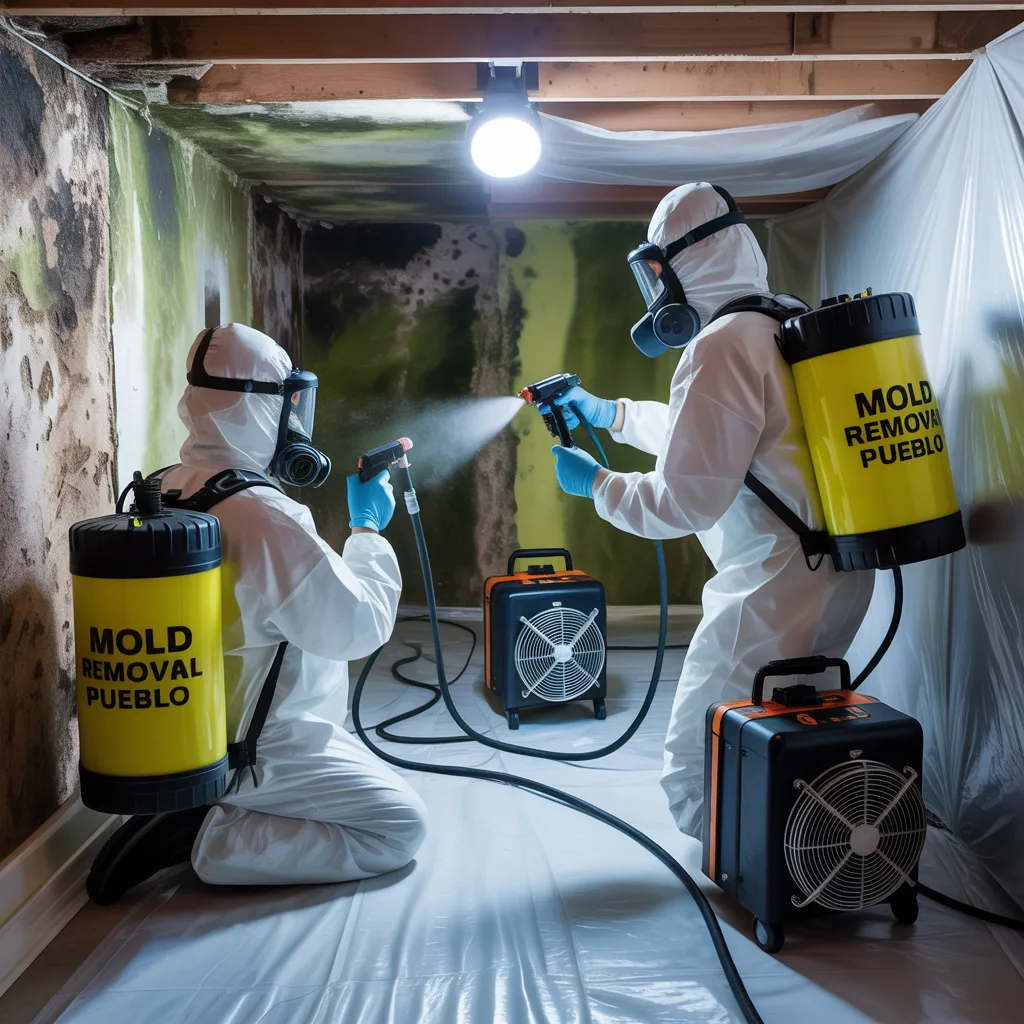
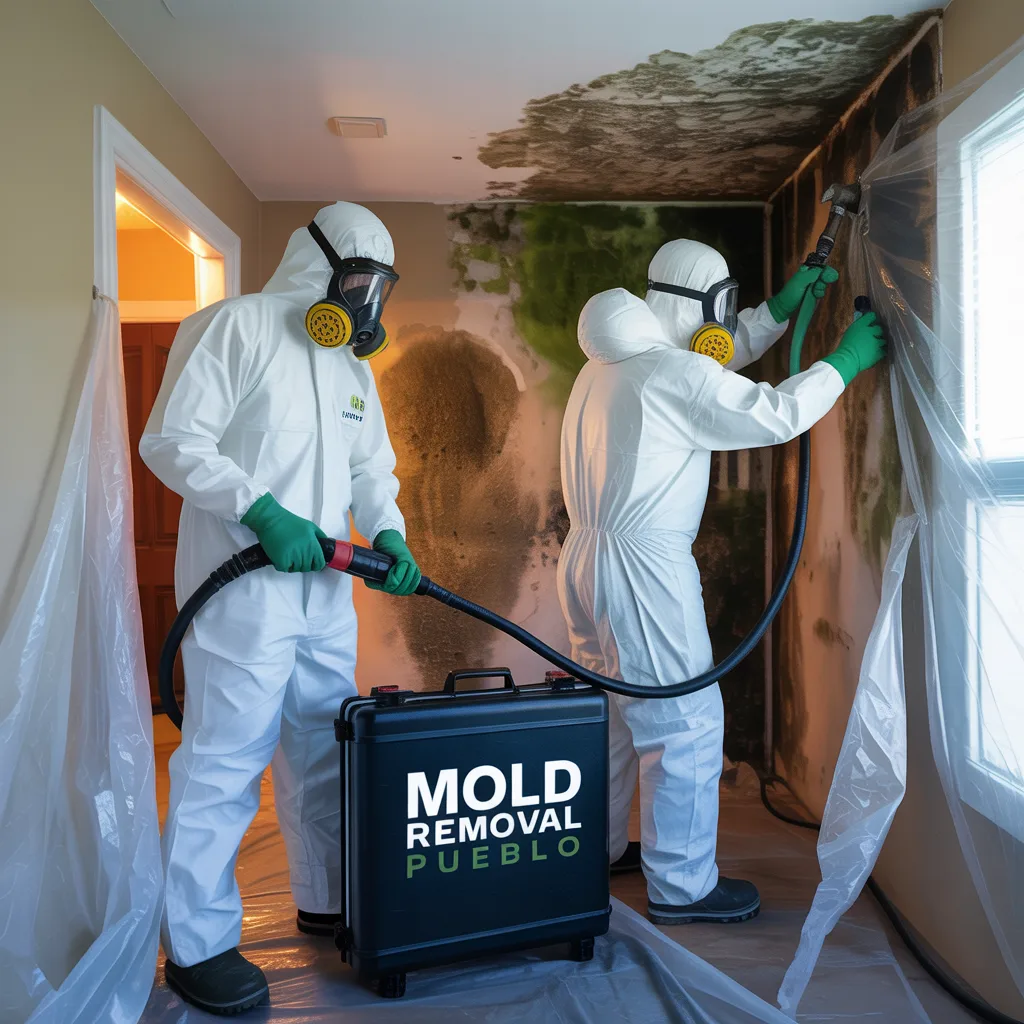
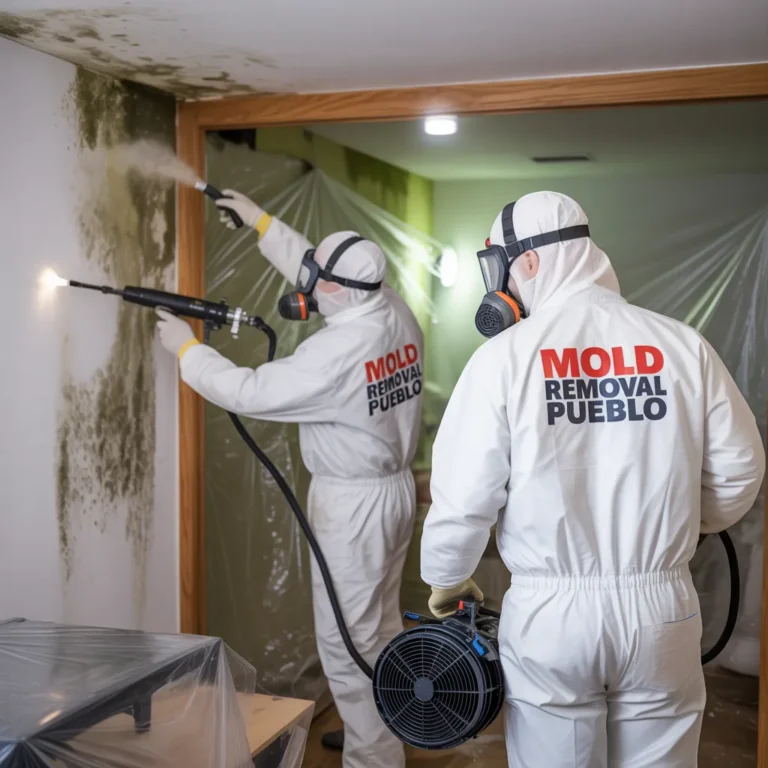
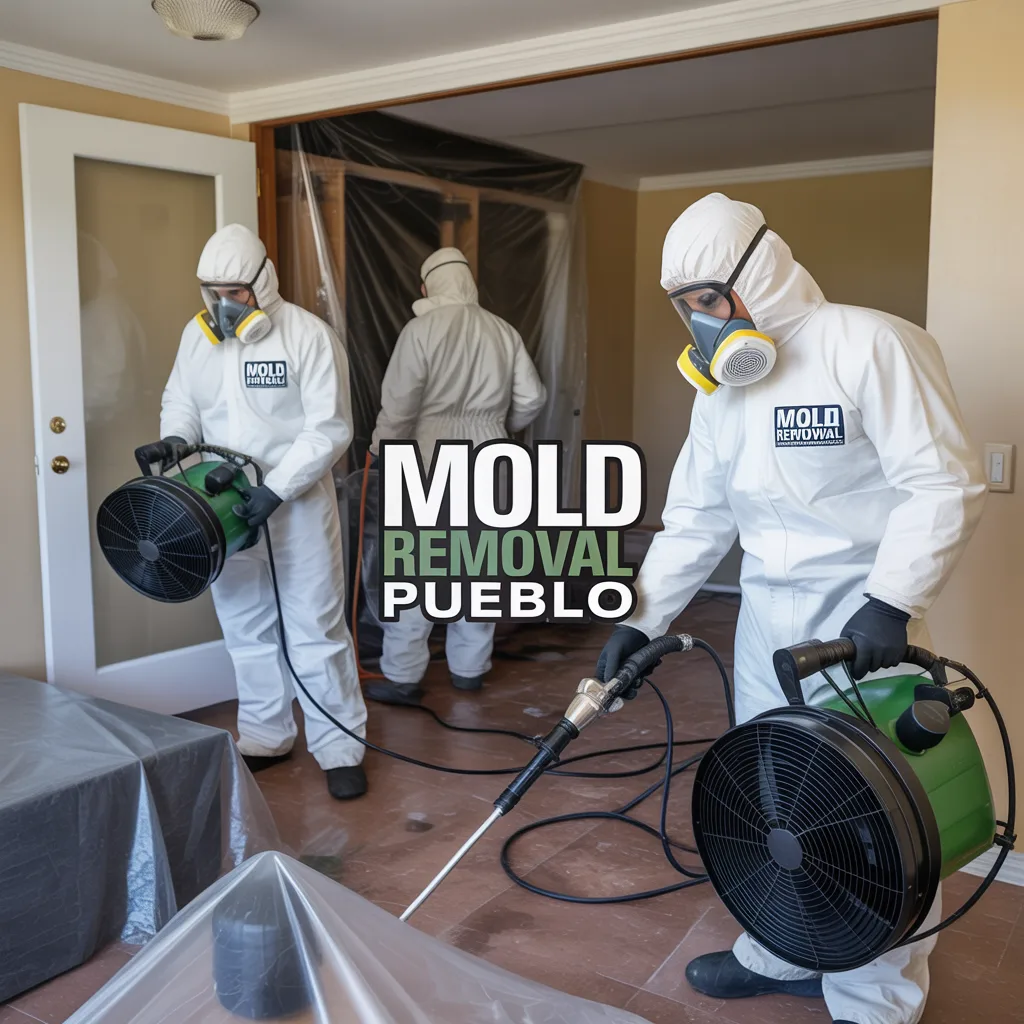
Once the affected area is understood, we isolate it. Plastic sheeting, controlled access, negative air equipment, and HEPA filtration help reduce spore spread into clean rooms.
This is especially important in Pueblo homes with older HVAC layouts. We often see return-air pathways that pull basement air into living areas, particularly in pre-1970s homes near the Union Avenue Historic District. Opening a contaminated wall without containment can move particles into bedrooms, hallways, and ducts.
The containment setup is not there for show. It gives the work area boundaries so contaminated drywall, insulation, flooring, or subflooring can be removed with less risk to the rest of the property. If the situation is severe, we may recommend that occupants stay out of the affected zone until removal and air cleaning are complete.
Homeowners who want to understand how we approach local conditions can visit Mold Removal Pueblo services before calling (719) 435-8606 for scheduling.
Controlled Removal and Surface Treatment
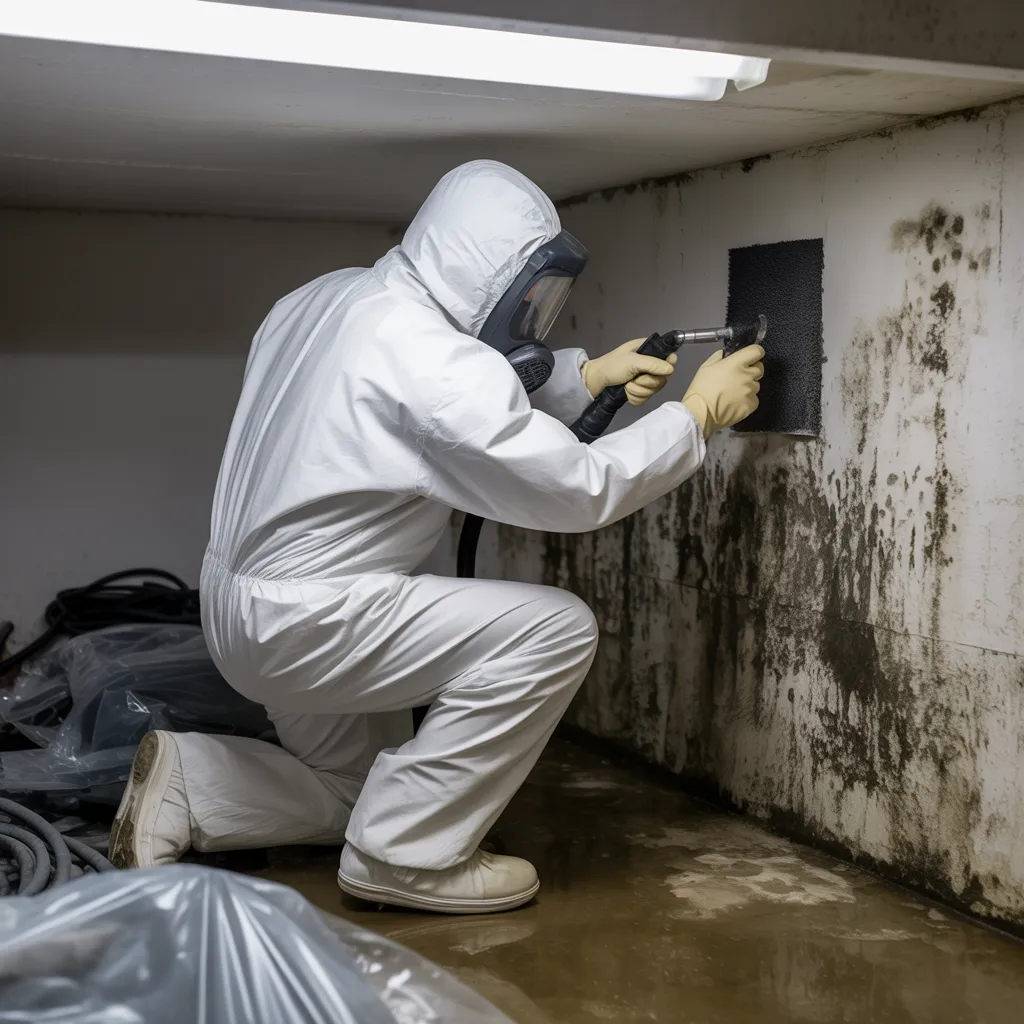
Biohazard mold cleanup usually requires removing porous materials that cannot be safely restored. That may include drywall, carpet padding, insulation, particleboard, baseboards, or sections of cabinet backing where contamination has gone beyond the surface.
We bag and remove affected material carefully, then clean remaining structural surfaces using HEPA vacuuming, detergent cleaning, antimicrobial treatment where appropriate, and drying support. In my experience, the biggest mistake is treating the stain while leaving damp framing or contaminated dust behind.
Pueblo’s dry climate can be misleading. A wall cavity may feel dry at the surface but still hold moisture around pipe penetrations, sill plates, or crawl space framing. Spring snowmelt and late-summer monsoon humidity can also reactivate areas that were never fully dried.
Verification, Drying Guidance, and Repair Readiness
After removal, we check the work area again before repairs begin. The area should be dry, visibly clean, and ready for reconstruction without trapping contamination behind new materials.
We also explain what has to change so the problem does not come back. That may mean improving crawl space vapor protection in Bessemer, redirecting drainage on St. Charles Mesa, repairing a slow plumbing leak in an Eastside wall, or adding ventilation in a Pueblo West basement room.
For property managers, we can document the affected materials, the cleanup steps, and the remaining moisture concerns in plain language. That helps owners make repair decisions without guessing what happened behind the wall.
Good remediation leaves the property ready for the next trade, not buried under mystery moisture and rushed patchwork.
Cost Of Biohazard Mold Removal In Pueblo
Biohazard mold removal in Pueblo usually starts around $1,200 to $2,500 for a small contained area, such as one bathroom wall, a limited sewage-affected closet, or a small crawl space section. Moderate projects often land between $3,000 and $7,500 when containment, demolition, disposal, HEPA filtration, and surface treatment are needed.
Larger or more hazardous jobs can run $8,000 to $15,000 or more. That is common when contamination involves multiple rooms, sewer backup, abandoned property conditions, heavy microbial growth behind walls, or difficult crawl space access.
Labor is a major part of the price because this work moves slowly for safety reasons. Technicians may need respirators, protective suits, sealed disposal bags, air scrubbers, decontamination steps, and careful removal instead of fast demolition. Disposal also costs more when materials are contaminated.
Pueblo-specific variables matter too. A tight crawl space in Bessemer can take longer than an open basement in Pueblo West. Older plaster walls near Downtown Pueblo can be more labor-intensive than modern drywall. A home near the Arkansas River corridor may also need extra drying time if moisture keeps entering through foundation cracks.
The most honest estimate comes after seeing the contamination source, access, square footage, and moisture conditions. That is how we separate a manageable contained job from a deeper indoor air quality concern.
Example of our Mold Removal Projects



Satisfied Customers in Pueblo, CO
Why Choose Mold Removal Pueblo for Biohazard Mold Removal?
Deep Knowledge of Local Mold Conditions
We work exclusively in Pueblo, CO and understand the moisture challenges that affect properties across ZIP codes like 81003, 81005, 81006, and 81007.
We Find the Source, Not Just the Surface
Every job includes identifying the moisture source behind the growth. Cleaning visible mold without fixing what is driving it is not a real solution.
Honest, Clear Communication
You will always know what we found, what needs to be done, and what to expect — in plain language, before any work begins.
Proper Containment Procedures
We contain every remediation job correctly to prevent spore dispersal to unaffected areas of the property.
Residential and Commercial Experience
From single-family homes to rental properties and commercial spaces, we have the experience to handle black mold situations of all sizes across Pueblo, CO.
Available Seven Days a Week
We are available Mon–Sun for inspections, remediation, and emergency mold service across all Pueblo ZIP codes — 81001, 81002, 81003, 81004, 81005, 81006, 81007, and 81008.
FAQ'S About Biohazard Mold Removal
What makes mold cleanup a biohazard situation?
Mold cleanup becomes biohazard-level when fungal contamination is mixed with unsafe materials such as sewage, bodily fluids, rotting organic matter, severe decay, or long-term hidden water damage. The concern is not only mold spores. It is the combined exposure risk from contaminated dust, bacteria, odor, damaged materials, and unsafe air movement.
How much does biohazard mold cleanup cost in Pueblo?
Most small contained projects in Pueblo start around $1,200 to $2,500. Mid-size jobs often range from $3,000 to $7,500, while severe contamination involving multiple rooms, crawl spaces, or sewage exposure can exceed $8,000. The final price depends on access, containment needs, demolition, disposal, drying time, and how far contamination has spread.
How long does the work usually take?
A small contained area may take one to two days. A moderate Pueblo basement, crawl space, or bathroom wall project often takes three to five days. Severe contamination can take longer if materials need careful removal, equipment must run for extended drying, or repairs are delayed until the structure is clean and dry.
Can I clean biohazard mold myself?
DIY cleaning is not recommended for biohazard mold conditions. Household cleaners do not solve contamination inside drywall, insulation, subflooring, or crawl space materials. Disturbing unsafe growth without containment can also spread spores and contaminated dust into clean areas of the home.
Why is Pueblo more prone to these problems in certain homes?
Pueblo has many older homes with aging plumbing, crawl spaces, brick construction, and ventilation gaps. Freeze-thaw cycles can stress foundation edges and vapor barriers, while spring snowmelt and late-summer humidity can push moisture into basements and wall cavities. Homes near the Arkansas River corridor, Eastside, Bessemer, and Downtown Pueblo often need closer moisture investigation.
What warning signs should I take seriously?
Strong musty odor, sewage smell, stained drywall, soft flooring, visible dark growth, recurring respiratory irritation indoors, and damp crawl space insulation should be taken seriously. Another warning sign is growth returning after it was painted over or wiped down. That usually means the moisture source was never corrected.
Do you remove contaminated building materials?
Yes, materials that cannot be safely cleaned may need to be removed. This can include drywall, insulation, carpet padding, baseboards, cabinet backing, particleboard, and damaged subflooring. Structural wood is evaluated differently because it may be cleanable if it is sound, dryable, and not deeply deteriorated.
Will the area be safe after remediation?
The goal is to leave the affected area dry, cleaned, and ready for repair. Safety depends on proper containment, removal, HEPA cleaning, moisture correction, and not rebuilding over damp materials. In more serious cases, third-party testing may be used after remediation for added verification.
Is biohazard mold more common during certain Pueblo seasons?
Yes. Pueblo winter freeze-thaw cycles can open small moisture pathways around crawl spaces and foundations. Spring snowmelt can increase basement seepage, especially near low-lying areas. Late-summer monsoon humidity can also worsen indoor moisture where ventilation is poor.
What should I do after the cleanup is finished?
Keep the area dry, repair the moisture source, and do not rush reconstruction before framing or subflooring is ready. Check crawl space vapor barriers, foundation drainage, plumbing connections, and ventilation. In Pueblo homes with older basements or additions, a follow-up moisture check after the next storm or snowmelt can prevent the same problem from returning.